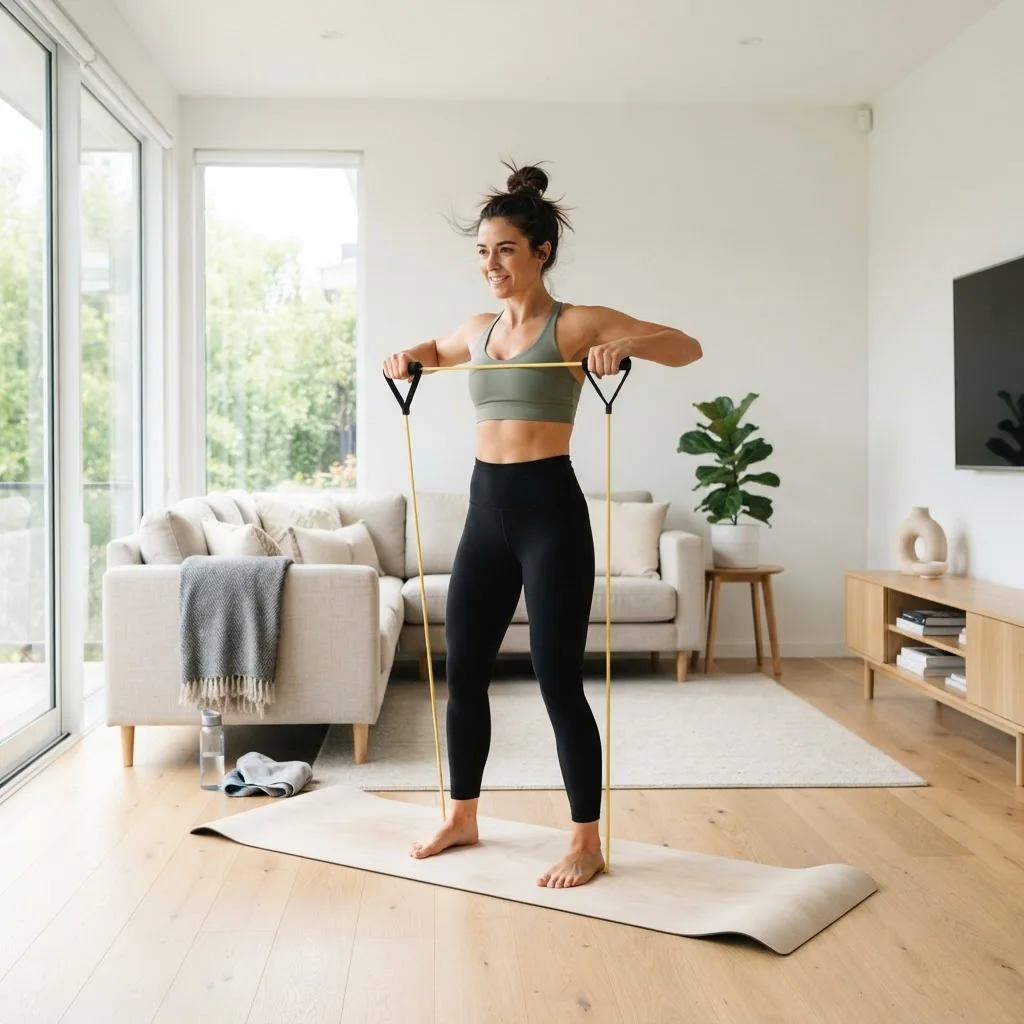
Bodyweight training can improve strength, balance and conditioning. Consistency and gradually increasing difficulty are the keys to progress.
Warm-up
Spend five minutes marching in place, circling your arms, opening the hips and performing controlled squats. A warm-up prepares the joints and improves movement quality.
Full-body circuit
Complete 10-15 squats, 8-12 push-ups, 10 lunges per leg, a 30-second plank and 20 mountain climbers in each round.
Adjust the level
Make push-ups easier against a wall or from the knees. Use a chair for squat support or slow the tempo when you need a harder variation.
Rounds and rest
Begin with two or three rounds. Rest for 60-90 seconds between rounds. Reduce repetitions if form starts to break down.
How to progress
Add one round, several repetitions or a longer plank each week. Improve one variable at a time rather than increasing everything together.
Cool-down
Slow your breathing and finish with gentle stretches for the hips and chest.
FitLife content is educational and does not replace individualized medical or professional advice.
Progress without equipment
Repetitions, tempo, rest periods and exercise difficulty are the main ways to progress at home. Change one variable at a time so improvement remains easy to measure.
- Make warm-up and cool-down part of the plan.
- Record load, repetitions, duration or energy levels.
- Stop rather than forcing a movement that causes sharp pain.
How can you track progress?
Review progress every two to four weeks under similar conditions. Look beyond body weight and consider technique, training loads, energy levels and consistency. The overall trend is more useful than one unusually good or bad day.