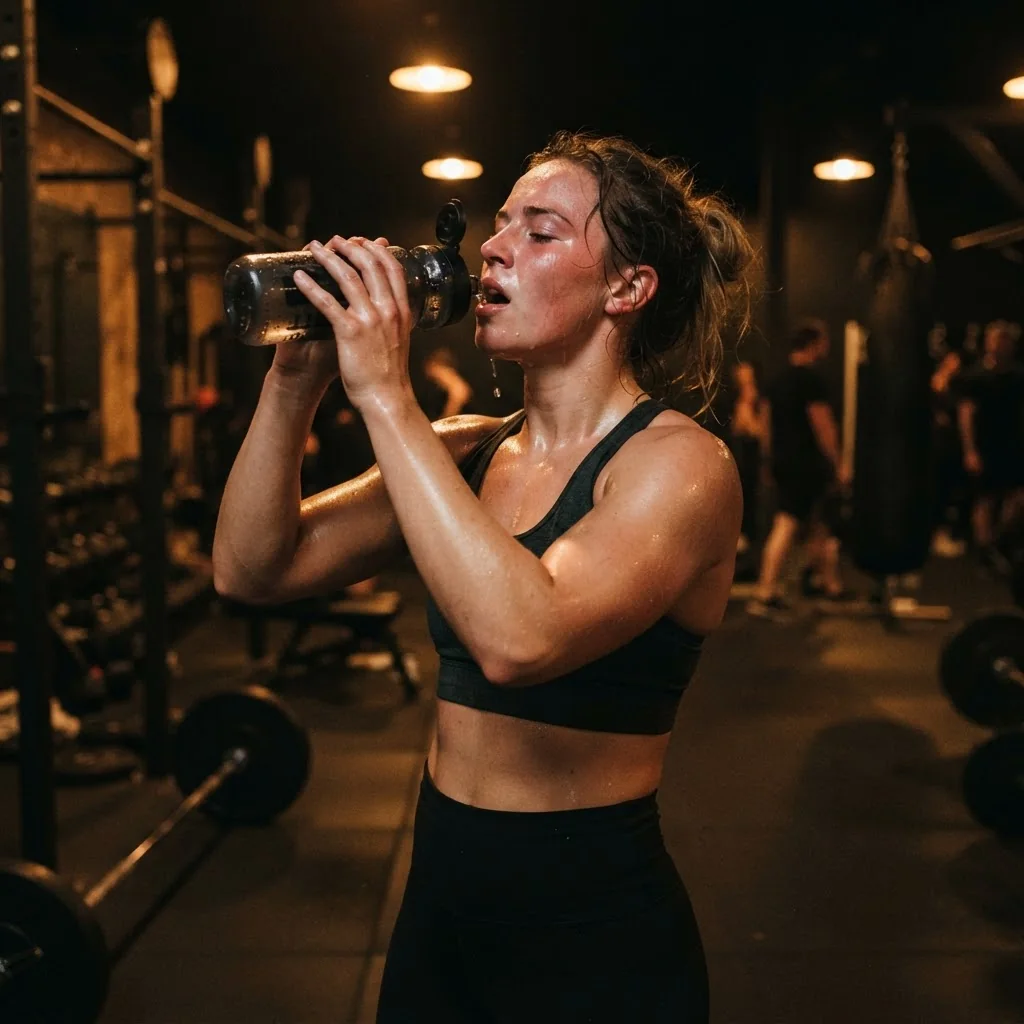
Water supports temperature regulation, circulation, digestion and muscle function. Even a small fluid loss can affect performance during demanding exercise.
Daily needs
No single amount is correct for everyone. Body size, weather, food intake and training duration all change fluid requirements.
Before training
Drink consistently throughout the day so you do not begin dehydrated. Consuming a very large amount immediately before exercise can cause discomfort.
During training
Water may be enough for short, easy sessions. Electrolyte drinks can be useful during long, hot or very sweaty workouts.
After training
Replace lost fluids gradually. Adequate sodium with meals is also important after heavy sweating.
Practical monitoring
Pale yellow urine is often a useful sign. Dark urine, headache and strong thirst may indicate a need for more fluids.
Avoid extremes
Excessive water intake in a short period can also be risky. Spread fluids through the day and seek medical guidance when needed.
FitLife content is educational and does not replace individualized medical or professional advice.
Create a personal hydration plan
Hydration needs change with temperature, sweat rate and session length. Drinking smaller amounts throughout the day is usually more practical than trying to replace everything during training.
- Make warm-up and cool-down part of the plan.
- Record load, repetitions, duration or energy levels.
- Stop rather than forcing a movement that causes sharp pain.
How can you track progress?
Review progress every two to four weeks under similar conditions. Look beyond body weight and consider technique, training loads, energy levels and consistency. The overall trend is more useful than one unusually good or bad day.