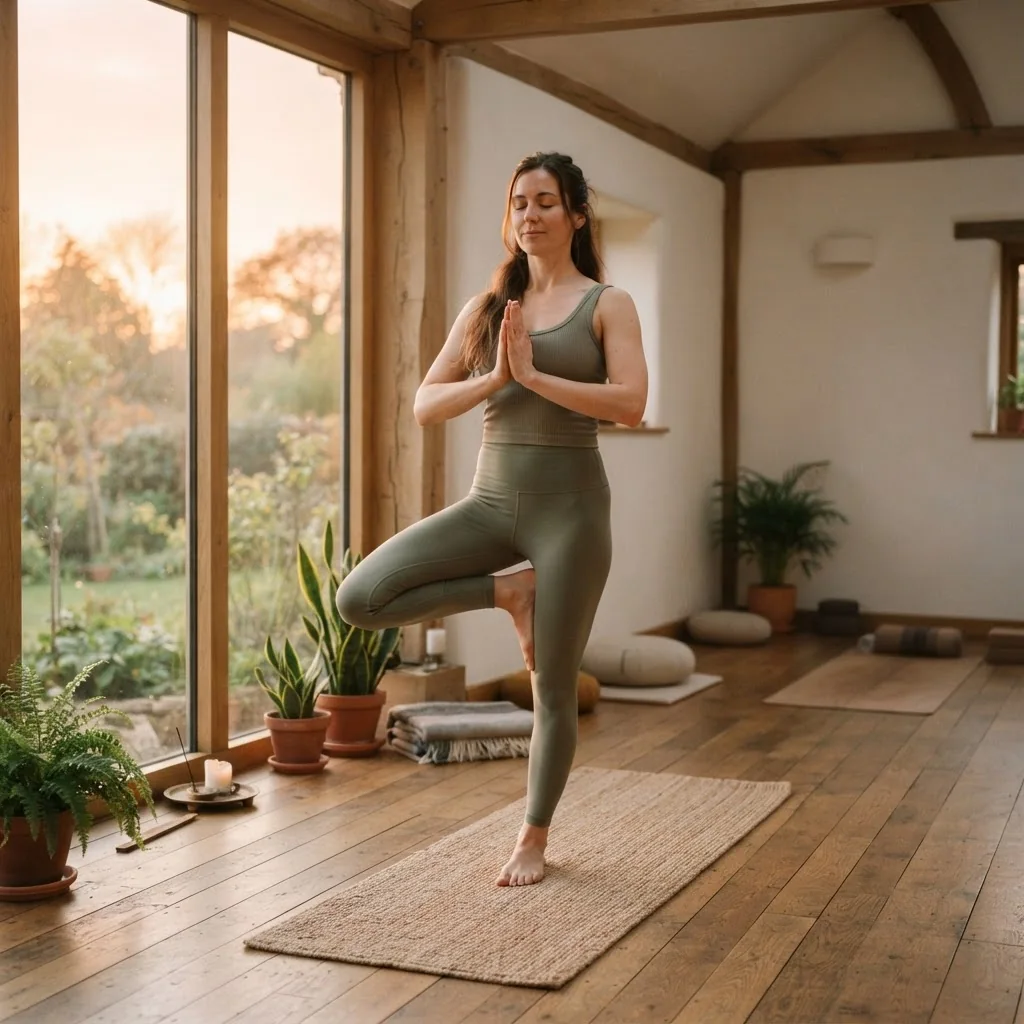
Yoga is more than stretching. It combines posture, strength, breathing and attention. Regular practice can improve everyday movement quality.
Flexibility and mobility
Holding poses with control helps muscles and joints adapt to different ranges. Progressing gradually is safer than forcing a position.
Balance and core control
Single-leg positions and controlled transitions keep the core active. This skill can support movement control in other sports.
Breathing control
Slow breathing regulates the rhythm of movement. Noticing the breath during stressful moments can support mental calm.
Strength development
Plank, downward dog and warrior poses build strength with body weight. Increasing hold time raises the challenge.
Beginner advice
Start with two short sessions per week. Stop positions that cause pain and use blocks or straps when helpful.
Balance with other training
Yoga can add mobility and active recovery to strength or running programs.
FitLife content is educational and does not replace individualized medical or professional advice.
Build a regular yoga habit
Short, regular sessions may be more sustainable than one long weekly practice. Add a fifteen-minute flow to a morning routine or after a strength session.
- Make warm-up and cool-down part of the plan.
- Record load, repetitions, duration or energy levels.
- Stop rather than forcing a movement that causes sharp pain.
How can you track progress?
Review progress every two to four weeks under similar conditions. Look beyond body weight and consider technique, training loads, energy levels and consistency. The overall trend is more useful than one unusually good or bad day.